
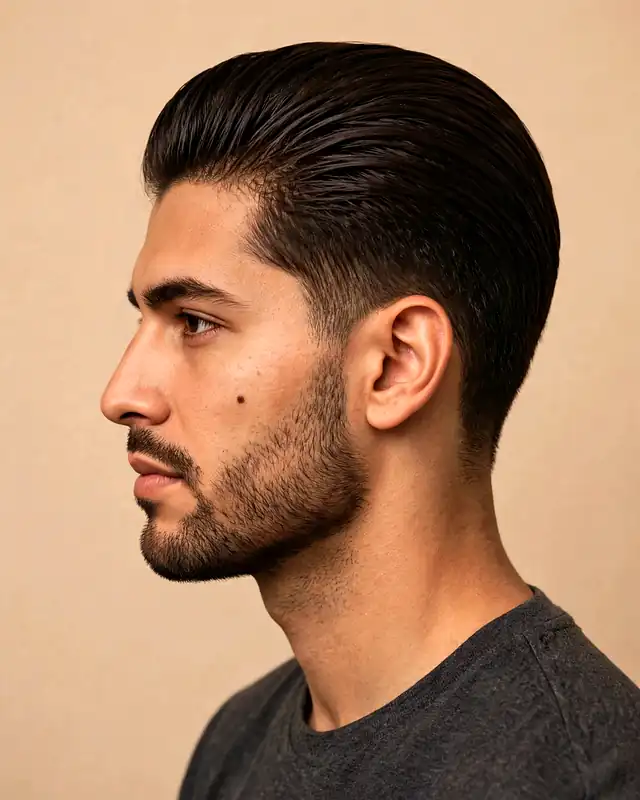
You have a V-shaped point in the middle of your hairline, and every haircut you consider has to work around it. That point is a widow’s peak. It is not a flaw, and it is not a sign of hair loss.
More hairstyles for a widows peak work than most men think, and they split into two camps: cuts that show the V and cuts that soften it. The choice is yours. This guide covers both directions, the 14 cuts that work best, and the exact words for your barber.
What a widow’s peak is (and what it is not)
A widow’s peak is a V-shaped point in the center of the hairline, where the hair grows down into a point. It is genetic and present from birth, not a sign of hair loss. The name comes from the hood of a widow’s mourning veil.
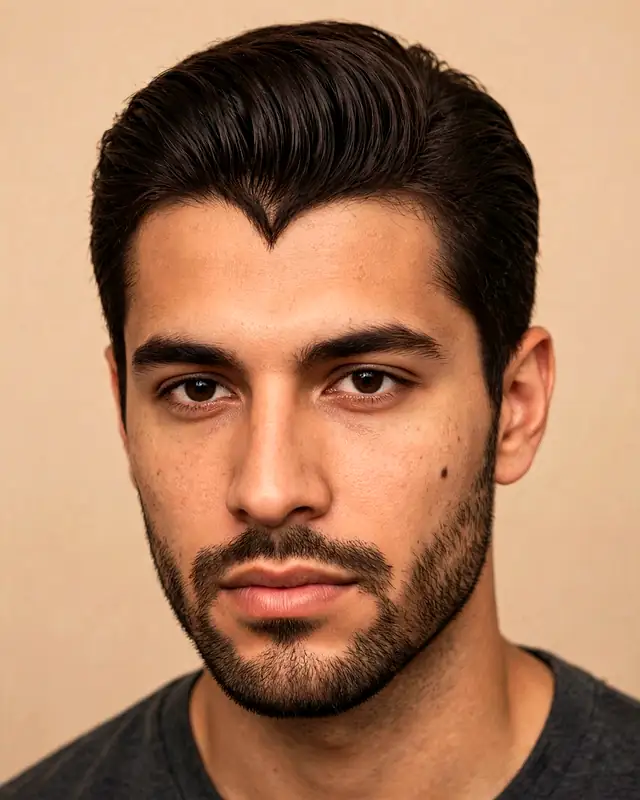
The V sits in the center of the forehead, where the hairline dips down into a point. It runs in families, and the PAX3 gene is the one researchers link to the shape. You are born with it. It does not appear later in life, and it does not mean your hair is thinning.
The name is old, from the 1700s, when a widow’s mourning hood came to a point on the forehead in the same shape. The peak itself is just hair growing in a V. The hairstyles for a widows peak in this guide all work with that V.
Widow’s peak vs receding hairline: how to tell
A widow’s peak and a receding hairline look similar at a glance, but they behave differently. A peak is a stable V shape with even density, present since youth. A receding hairline forms an M shape, thins at the temples, and moves back over time.
The old photos test is the simplest check. Find a photo of yourself from five or ten years ago and compare the hairline. A widow’s peak looks the same in both. A receding hairline has moved back, usually at the temples first, and the hair there looks thinner.
Shape is the second check. A peak forms a V in the center with even density on both sides. A receding hairline forms an M, with the temples pulling back and the center holding longer.
The Hamilton-Norwood scale is the standard way doctors grade male hair loss, and it tracks that M pattern as it deepens. If the temples are thinning and the hairline is moving, that is a different conversation than a peak, and a dermatologist is the right person for it.
Show it or soften it: the first decision
Every cut for a widow’s peak goes one of two ways: show it or soften it. Show it with hair swept back, so the V frames the face. Soften it with a fringe or a crop that breaks the point. Neither choice is better.
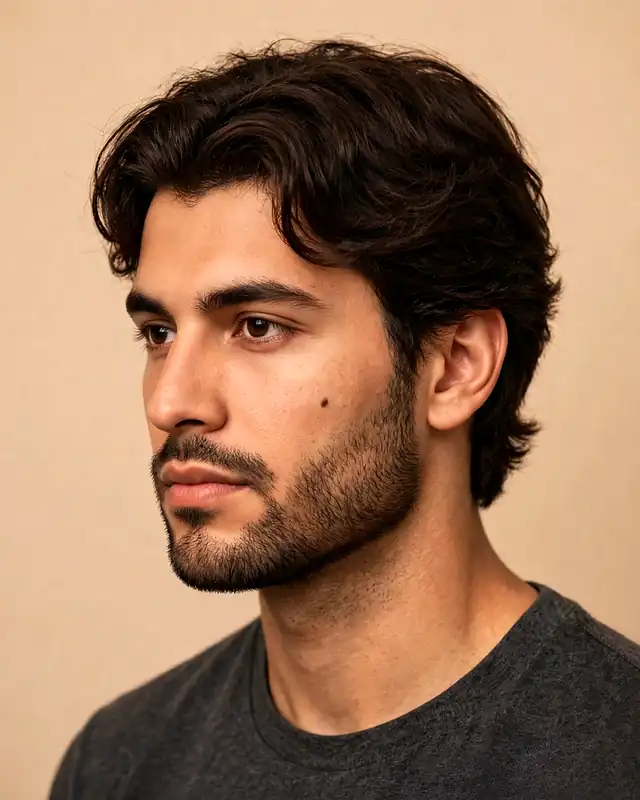
Showing the peak means building the cut around the V. A slick back, a quiff or a pompadour uses the point as the frame, and these cuts suit men who like a deliberate, groomed look. Softening the peak means breaking the point with texture or covering it with a fringe.
A textured crop, a Caesar cut or a French crop does this, and these cuts suit men who want the hairline to sit quietly. Your face shape and your hair type push the choice one way or the other. A round face often suits the height of a quiff. A long face often suits the cover of a fringe.
There is no wrong answer here, only the look you prefer. The hairstyles for a widows peak in this guide split along that same line, so pick a direction before you pick a cut.
Short hairstyles for a widows peak
Short cuts suit a widow’s peak because they reduce the contrast between the hair and the forehead, which makes the point less obvious. A buzz cut, a crew cut or a short crop all work. The peak stays visible, but it stops drawing the eye.
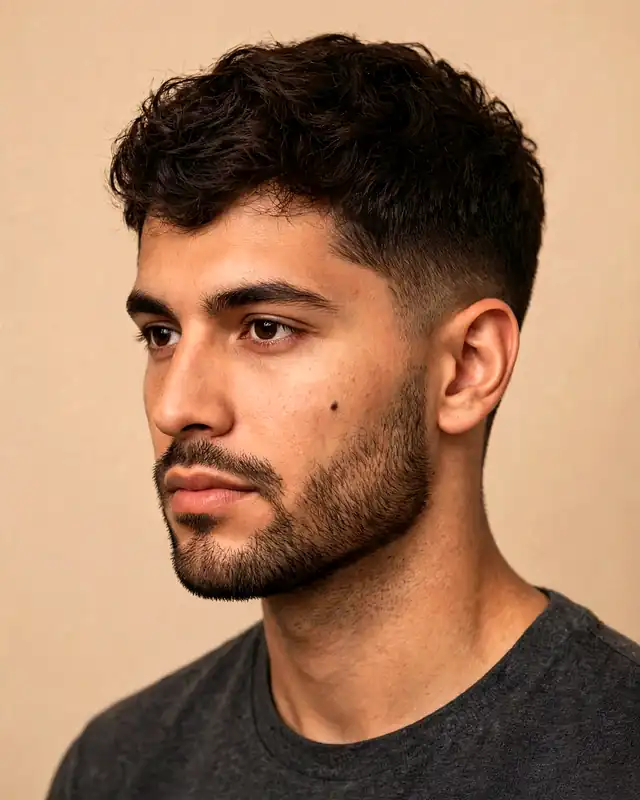
The buzz cut is the simplest short option. A #2 to #4 guard across the top keeps the length even and the contrast low, so the peak reads as part of the hairline instead of a feature on its own. A crew cut keeps a little more length on top, around an inch to an inch and a half, with tapered sides, which gives the peak a cleaner frame.
A short textured crop adds choppy layers on top and pushes the hair forward, which breaks the point without hiding it. An Ivy League cut is a longer crew cut with a side part, and it works when the part sits on the side the peak leans toward. All four need little styling and grow out without an awkward stage.
The sides matter as much as the top. A low to mid fade keeps the V as the focal point, while a very high fade exposes more forehead and makes the peak look larger.
The textured crop: the safest way to soften the peak
A textured crop is the most reliable way to soften a widow’s peak. The top is cut short and forward, with choppy layers that break the hairline into uneven pieces. The V loses its clean edge, and the eye reads texture instead of a point.
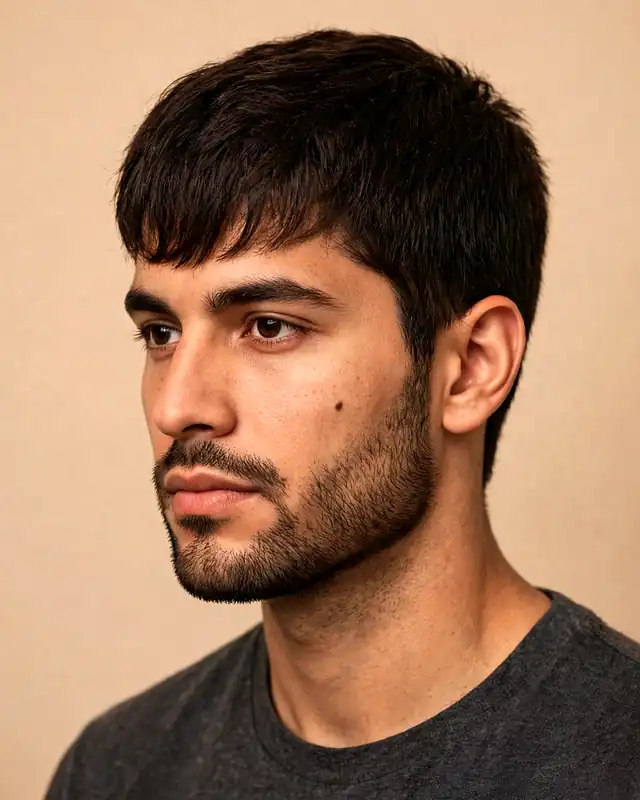
The textured crop works because it breaks the hairline into uneven pieces. The barber cuts the top short and points the scissors into the ends to create choppy layers. Those layers fall forward over the forehead and scatter the eye, so the V never gets a clean edge to follow.
Ask for texture through the top and a fringe that sits forward, not swept to one side. A matte clay or a volumizing powder helps the texture hold through the day. Blow-dry the top forward with your fingers, not a brush, to keep the pieces separate. The crop grows out well, since the layers just get longer and the peak stays broken up.
Caesar cut and French crop: fringes that cover the point
A Caesar cut and a French crop both use a short fringe pushed forward over the forehead, which covers the tip of the peak. A Caesar is blunt and even, while a French crop is textured and uneven. Both hide the point well.
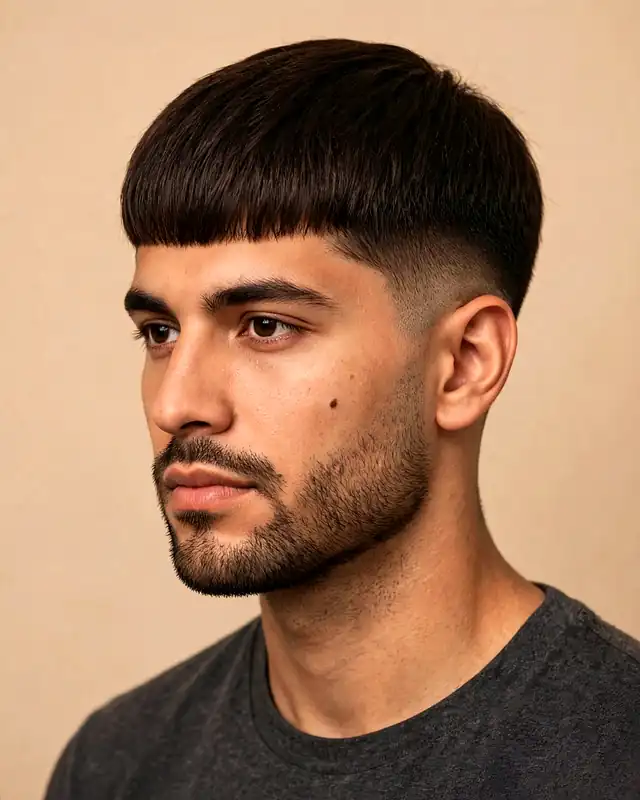
A Caesar cut is the blunt option. The fringe is cut straight across the forehead at one even length, which covers the tip of the peak behind a clean line. It suits straight hair best, since the blunt edge needs a smooth surface to sit on.
A French crop is the textured version. The fringe is cut with choppy layers and pushed forward, which covers the point while keeping some movement. One warning: texture the fringe more than usual on a French crop, or the peak pushes the blunt line into a point and the cover fails. Both cuts need a trim every three to four weeks to keep the fringe at the right length.
Slick back: the cleanest way to show it
A slick back is the cleanest way to show a widow’s peak. The hair goes straight back and leaves the V fully visible. It needs length on top, around 8 to 12 cm, with a low to mid fade on the sides.
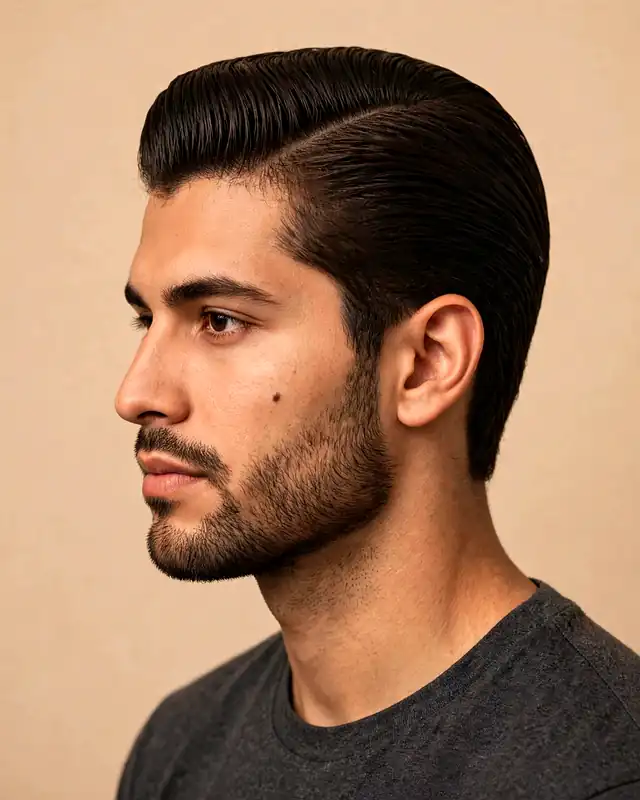
The slick back needs length on top, around 8 to 12 cm (3 to 5 inches), with the front a little longer than the crown. The barber cuts the sides into a low to mid fade and leaves the top long enough to comb straight back.
Styling takes a few minutes. Work a matte clay or a light pomade through damp hair, comb it back from the hairline, and let it set. The peak frames the face from the front, and the V reads as a deliberate part of the style.
A high skin fade works against the look, since it exposes more forehead and pulls attention away from the V. Keep the sides low and the top neat, and the slick back does the rest.
Quiff and pompadour: volume that uses the V
A quiff and a pompadour both build height on top, which pulls the eye upward and turns the V into a starting point rather than a flaw. The quiff is looser and more casual. The pompadour is taller and neater, and needs more product.
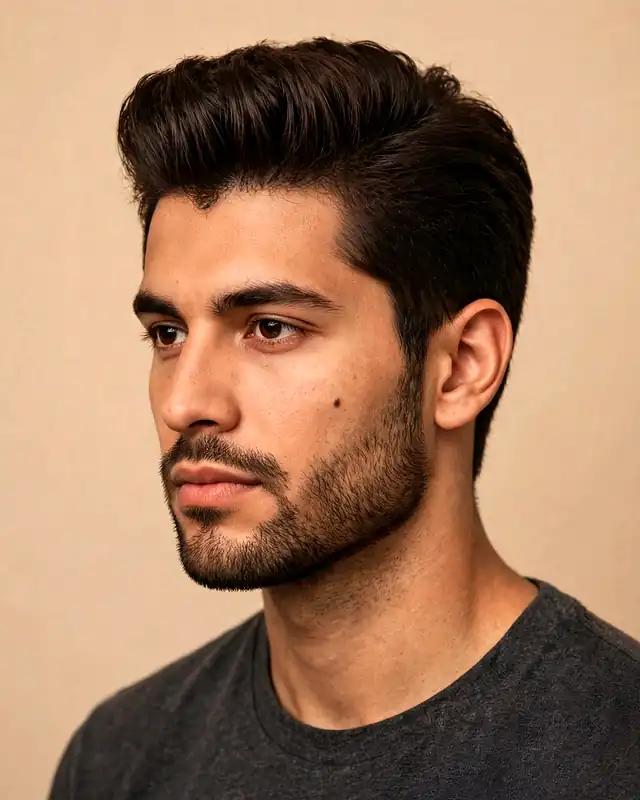
A quiff lifts the front up and back, with the sides faded or tapered. It needs medium length on top and a round brush plus a blow-dryer to set the lift. The V sits at the base of the lift, which is why the quiff works: the peak becomes the starting point of the volume instead of a break in the hairline.
A pompadour goes taller and neater, with more product and a cleaner finish. It needs more time each morning and a stronger hold. Both styles suit round faces, since the height stretches the face. Both need a barber who can cut the top with scissors and shape the volume, not just run clippers over it.
Undercut and faux hawk: bolder options
An undercut and a faux hawk both use sharp contrast, which makes the peak part of a deliberate style instead of an accident. The undercut keeps the top long and the sides short. The faux hawk pushes the center up into a ridge.
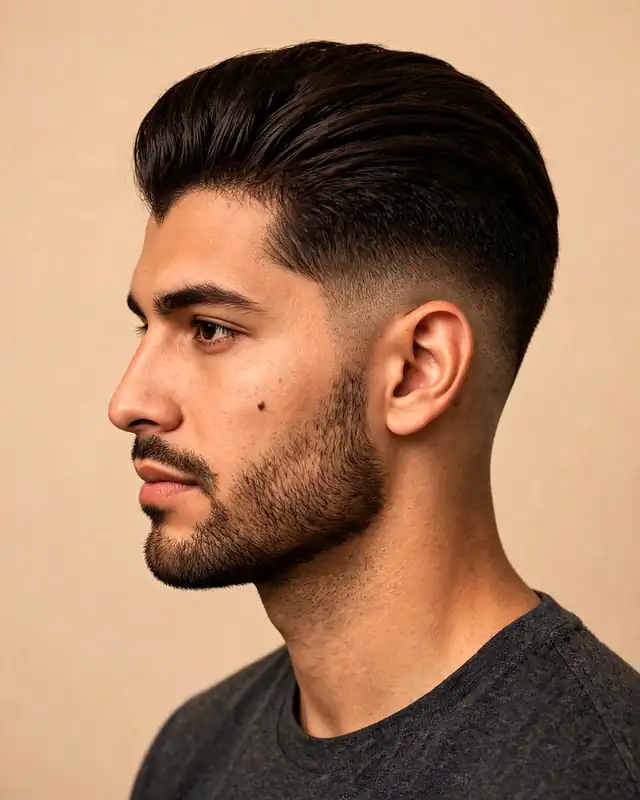
An undercut keeps the top long and the sides short, with a sharp disconnect between the two. The top can go slicked back, swept to one side, or textured, and the V frames whichever direction you choose. A faux hawk pushes the center strip up into a ridge and tapers the sides hard, which makes the peak part of the ridge line.
Both cuts are bolder than the other hairstyles for a widows peak in this guide, and both need styling every day. The undercut needs length on top to work, so it is a poor pick if you want to keep things short. The faux hawk needs a barber who can blend the ridge into the taper without a hard step.
Side parts and comb overs: what works and what clashes
Side parts and comb overs can work with a widow’s peak, but the part line has to respect the V. A low side part swept toward the peak’s lean usually works. A hard center part fights the point and makes the peak look wrong.
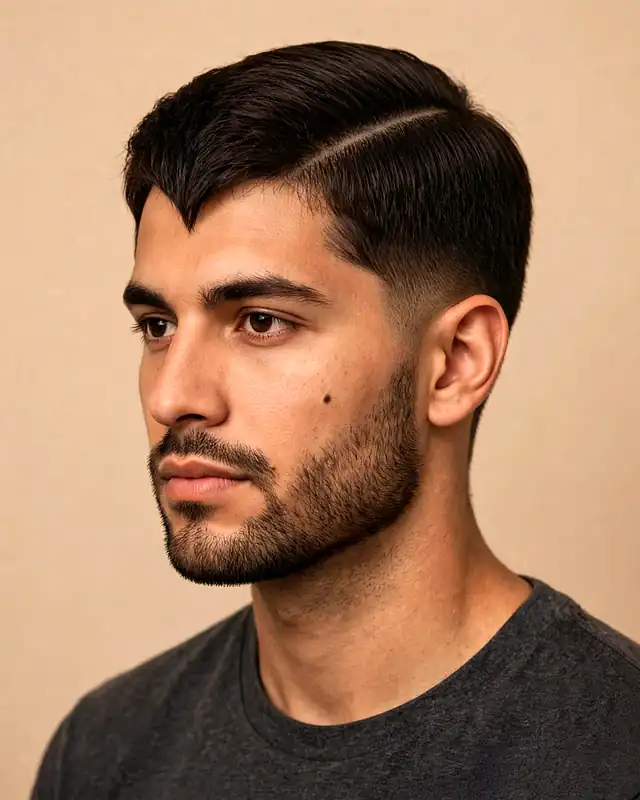
A low side part works when the part line sits on the side the peak leans toward, so the hair sweeps with the V instead of against it. A side swept comb over works the same way, with the top swept to one side and the peak left visible at the front.
A hard center part is the one to avoid. It splits the hair at the point where the V already divides it, which makes the peak look like a mistake. A heavy side part with a hard razor line has the same problem. If you like a part, keep it low and soft, and let the barber place it where your hair naturally wants to go.
The line-up: getting the edges right around the point
A line-up around a widow’s peak follows the V instead of cutting across it. The barber cleans only the wispy hairs outside the point, softens the tip, and checks from the front and above. A straight line across the peak looks wrong in days.
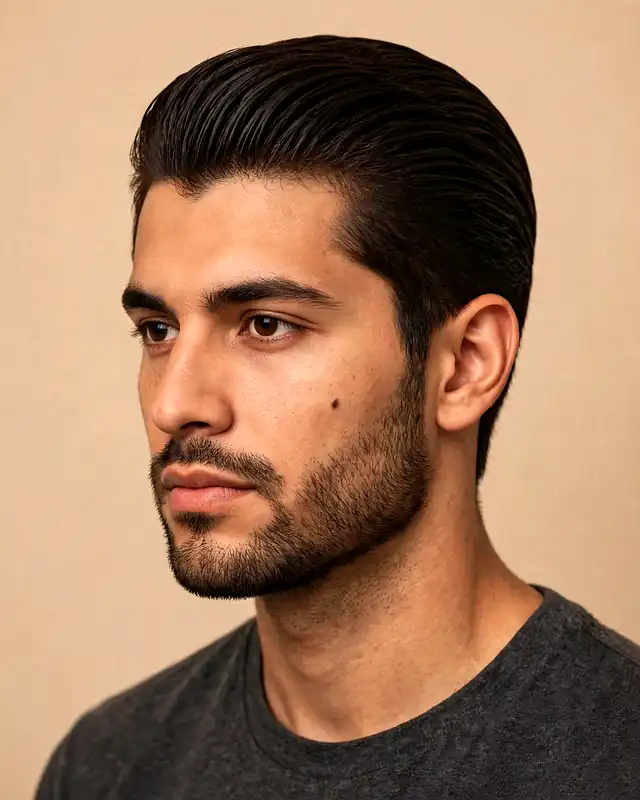
The line-up is where a widow’s peak gets ruined or respected. A barber who follows the V keeps the point and cleans only the wispy hairs outside it, then softens the tip so it does not look too sharp. A barber who cuts straight across the peak creates a flat line that grows out into stubble shadow within two to three days, and the temples look exposed by comparison.
Ask the barber to check the shape face-on and from above before finishing, since the V looks different from each angle. If your peak sits off-center, the line-up should follow the lean, not force a center point. A soft edge lasts longer than a razor line here, since the peak grows out in its own shape.
Face shapes and the peak
A widow’s peak adds length to the face, which changes what each face shape needs. Round faces gain from height on top, since the peak and the volume stretch the face. Long faces gain from a fringe, which shortens the forehead and balances the point.
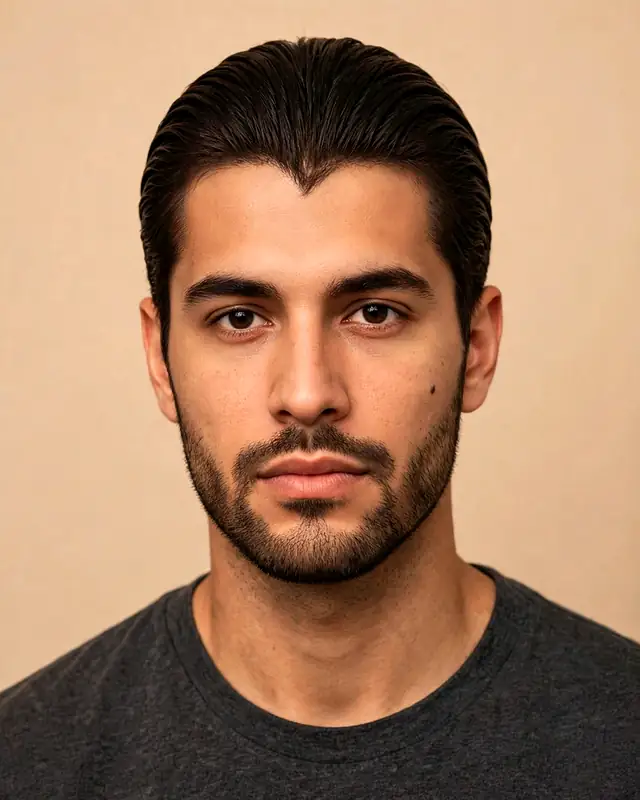
Round faces gain the most from a widow’s peak, since the point adds length and a quiff or pompadour adds more height on top. Square faces pair well with a slick back or a textured crop, since the V softens the jawline. Oval faces have the easiest time, since the proportions already balance, so almost any of the hairstyles for a widows peak in this guide works.
Long faces need a fringe to shorten the forehead, since the peak adds length where the face is already long. Heart faces suit a side-swept top, which fills the forehead without adding width at the jaw. Face shape is a guide, not a rule. Hair type and personal taste matter just as much.
Hair types: straight, wavy, curly and thinning
Hair type changes how the peak behaves in a cut. Straight hair shows the V most clearly, wavy hair softens it with movement, and curly hair hides it in texture. Thinning hair needs short, structured cuts that keep the peak from looking like a gap.
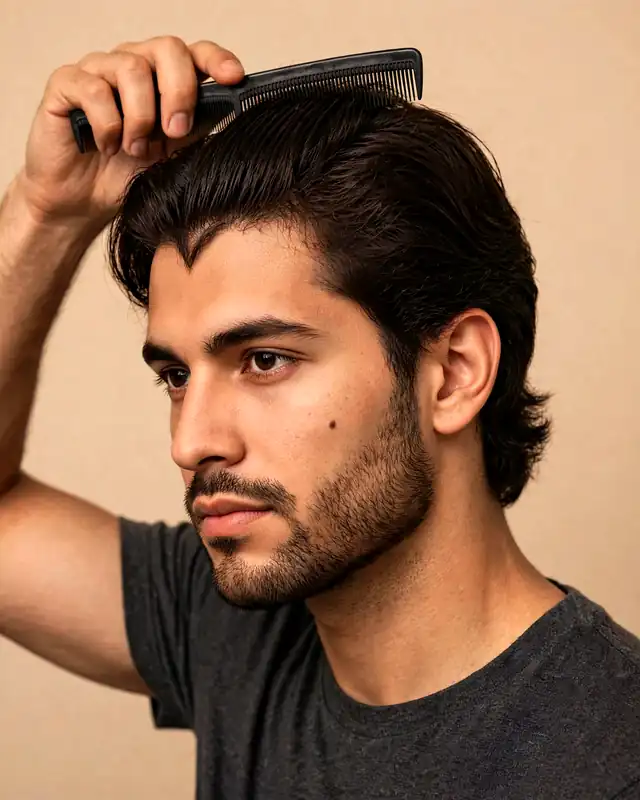
Straight hair shows the V most clearly, which makes it the best hair type for cuts that show the peak. A slick back sits well on straight hair, and so does a Caesar cut or a crew cut. Wavy hair softens the point with movement, so textured fringes and pompadours work well.
Curly hair hides the peak in texture, which makes short crops and fades the easy pick. Thinning hair needs short, structured cuts, since length on top draws attention to thin spots and makes the peak look like a gap. A buzz cut or a short crop keeps the focus on the shape of the cut, not on the density. Thick hair can carry any of the hairstyles for a widows peak in this guide, since volume is never the problem.
What to tell your barber (and what to avoid asking for)
Tell your barber whether you want to show the peak or soften it, then name the cut and the sides. Say “keep the V” or “soften the point” in plain words. Never ask a barber to shave the peak straight. Stubble shadow shows within days.
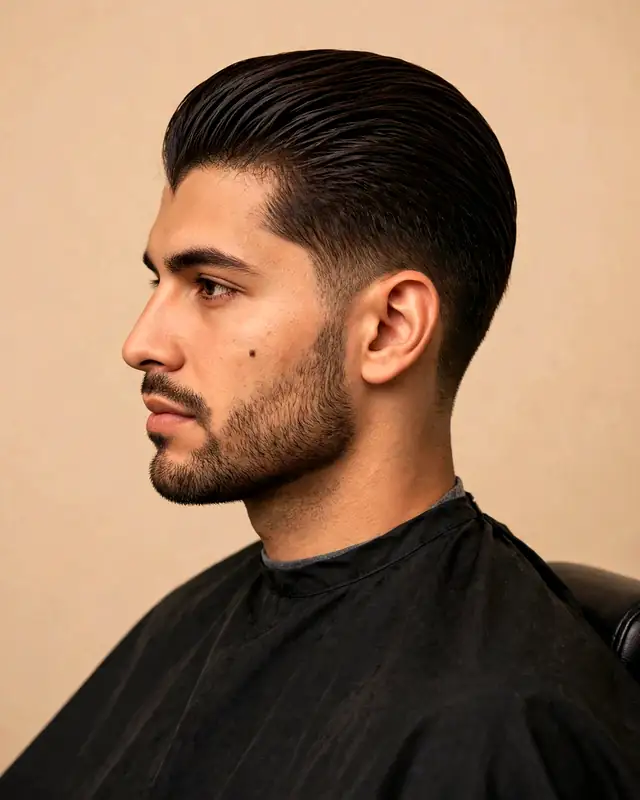
Start with the direction: “I want to show the peak” or “I want to soften the point.” Then name the cut and the sides. “Textured crop on top, low taper on the sides” is a full ask.
Mention the peak by name, since barbers see many hairlines a day and a clear instruction beats a vague one. Say whether you want a line-up or a soft edge, and whether the peak sits off-center.
Never ask a barber to shave the peak straight. The stubble shadow shows within two to three days, the temples look exposed, and the fix is growing it back. If a barber suggests cutting the peak off, find another barber.
Frequently asked questions
The questions below cover the points men ask about most, from balding worries to buzz cuts. Each answer is short. The full detail sits in the sections above, so use these answers as a quick check before you book your visit.
Is a widow’s peak a sign of balding?
It is not a sign of balding. A widow’s peak is a shape you are born with. It stays the same for life, while balding thins the temples and moves the line back. Same peak in old photos means it is not balding.
If the temples are thinning too, that is worth a separate check.
Can a widow’s peak be hidden completely?
A fringe or a forward crop can cover the point so well that it barely shows, but the peak is still there underneath. A buzz cut takes a different route. It makes the point less obvious by cutting the contrast with the forehead.
A fringe is the closest thing to hiding it, and it needs a trim every three to four weeks.
Can I wear a buzz cut with a widow’s peak?
A buzz cut is one of the easiest ways to wear a widow’s peak, because the short length cuts the contrast between the hair and the forehead. The V stays visible. A #2 to #4 guard works well with a low taper.
Start with a #3 if you are unsure. A barber can always take more off.
My peak sits off-center. What should I do?
Part or sweep the hair toward the side the peak leans to, or cover it with a fringe. Do not try to cut the peak central, since the hair grows from a fixed point. A barber can shape the sides to balance the lean.
A fringe is the simplest fix if the lean bothers you.
Is a fade a good idea with a widow’s peak?
A low to mid fade works well, because it keeps the V as the focal point and the sides tidy. A very high skin fade exposes more forehead and makes the peak look larger. Keep the fade low to keep the peak subtle.
A low taper is the safe default. It keeps the sides tidy without exposing the forehead.
Bottom Line
Hairstyles for a widows peak suit more men than most think, and the first step is deciding whether to show it or soften it. If you are unsure, start with a textured crop. It softens the point, suits most faces, and grows out cleanly.
Book the cut with the direction in mind: show it or soften it. Tell the barber which way you want to go, name the cut, and let the peak do the rest.